Call us Anytime
+8613570976228



Why MMO Anode Coating Technology Mysteriously Fixes Hard Corrosion Hazards?
Industrial corrosion costs the global economy US$2.5 trillion annually. You can eliminate severe downtime and high maintenance costs with advanced MMO Anode Coating Technology. By bonding noble metal oxide layers to pure titanium substrates, Dimensionally Stable Anodes provide extreme catalytic activity and chemical stability. Esegen delivers custom-engineered MMO solutions to solve your hardest industrial water treatment and corrosion hazards reliably.
Key Takeaways
• MMO anodes lower electricity costs by making chemical reactions use less power
• Titanium bases stop equipment rust and last over 50 years in harsh liquids
• Lightweight design makes installation safe, fast, and inexpensive for worksite crews
Understanding MMO Anode Coating Technology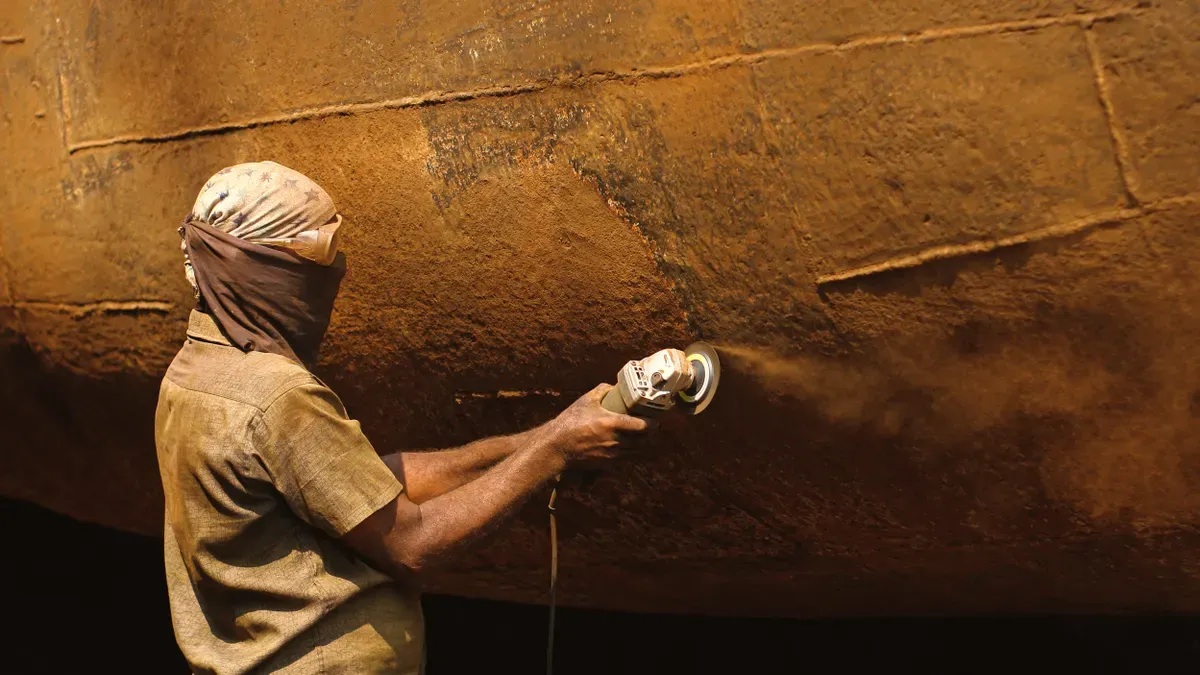
You can solve severe industrial corrosion hazards by understanding the electrochemical mechanics behind advanced electrode systems. Traditional metals dissolve quickly under heavy electrical loads. In contrast, MMO Anode Coating Technology transforms standard equipment into a stable oxidation center.
By applying active noble metal oxides onto a solid base, you unlock three primary electrochemical mechanisms:
• Non-Sacrificial Low Consumption Rate: The electrode serves as a durable, highly stable impressed current cathodic protection (ICCP) active surface rather than consuming itself.
• Electrocatalytic Surface Activation: The process converts an otherwise non-conductive passive titanium base into a high-performance, conductive anode.
• High Current Density Output: You deliver elevated current per unit area reliably across severe electrolytes like marine, underground, and concrete media over extended operational lifetimes.
Role of Ruthenium-Iridium and Platinum Coatings
The active catalytic layer dictates how effectively your equipment drives critical chemical reactions. Esegen engineers high-efficiency coatings by blending noble metal oxides like Ruthenium Oxide ($\text{RuO}_2$), Iridium Oxide ($\text{IrO}_2$), and Platinum. Ruthenium oxide serves as the primary active catalyst. It drives exceptional electrocatalytic activity for the chlorine evolution reaction. When paired with iridium oxide in a standard 70:30 formulation, the coating achieves an optimal equilibrium between superior electrochemical performance and long-term structural stability.
Note: Blending valve metal oxides into the active matrix prevents early oxidation decay, maximizing energy transfers during continuous industrial runs.
You can select specific coating formulations depending on your operational media and targeting requirements:
• Ruthenium Oxide ($\text{RuO}_2$): Extensively utilized in binary oxide mixtures alongside $\text{TiO}_2$ for chlorine evolution reactions.
• Iridium Oxide ($\text{IrO}_2$): Widely applied in anodic coatings targeted for oxygen evolution reactions, functioning as a primary active noble metal oxide combined with valve metal oxides for durability.
The following table breaks down common coating compositions and performance metrics:
| Coating Composition | Expected Operational Lifespan | Catalytic Efficiency & Performance Characteristics |
| $\text{RuO}_2$-$\text{IrO}_2$-$\text{TiO}_2$ (70:20:10) | 8 to 10 years | Delivers high chlorine output, optimal conductivity, and enhanced resistance against corrosion during chlorine evolution. |
| $\text{RuO}_2$-$\text{IrO}_2$ (High Ru content) | Extended multi-year stability | Exhibits high reaction rates for chlorine evolution while minimizing energy consumption. |
Titanium Substrates and Dimensional Stability
The foundational strength of your anode relies heavily on its core material. Esegen uses pure titanium substrates matching ASTM B265 Grade 1 or Grade 2 commercial purity standards. This material features a baseline titanium concentration of no less than 99.2%. The pure titanium core serves as a robust base material for MMO anodes by offering essential structural integrity alongside high resistance to chemical degradation.
The underlying titanium substrate undergoes self-passivation by forming a thin titanium dioxide ($\text{TiO}_2$) protective oxide layer. This thin layer provides underlying chemical corrosion resistance and structural integrity for the electrocatalytic coating. Because titanium retains its original shape and physical dimensions throughout its service life, engineers call these systems Dimensionally Stable Anodes (DSA). Esegen's precise engineering ensures over 18 years of titanium base material durability and over 5 years of active coating life, protecting your plant against physical deformation.
Electrocatalytic Efficiency and Lower Overpotential
Energy consumption represents a major operational cost during industrial electrolysis. MMO Anode Coating Technology dramatically reduces overall electrical energy consumption by maintaining a low chlorine evolution potential. Electrochemical reactions depend on overpotential—the extra voltage required to force a reaction forward. Lower overpotential means higher energy efficiency.
| Anode Material Type | Chlorine Evolution Overpotential |
| Bare Graphite (Traditional) | ~1.6 V |
| Ruthenium-based MMO Coated Titanium | ~1.3 V |
By dropping the operational voltage from 1.6 V down to 1.3 V, you save substantial electrical power every hour. Furthermore, the active coating demonstrates high reaction selectivity across different operational environments:
| Electrochemical Mechanism / Reaction | Environment | Operational Process & Feature |
| Chlorine Evolution Reaction (CER) | High-chloride / Seawater | $2\text{Cl}^- \rightarrow \text{Cl}_2\uparrow + 2\text{e}^-$; operates as the thermodynamically favored pathway with low overpotential. |
| Suppression of Oxygen Evolution | High-chloride / Seawater | Coating selectivity suppresses the secondary oxygen evolution side reaction, directly maximizing current efficiency. |
| Oxygen Evolution Reaction (OER) | Low-chloride / Soil, Freshwater, Concrete | $2\text{H}_2\text{O} \rightarrow \text{O}_2\uparrow + 4\text{H}^+ + 4\text{e}^-$; handles strong oxidizing conditions and localized acidity via high catalytic activity ($\text{IrO}_2$) and structural stabilization ($\text{Ta}_2\text{O}_5$). |
This high catalytic selectivity keeps your operational systems running at peak output while preventing unwanted side reactions.
MMO Anodes vs. Legacy Cathodic Protection Materials
Legacy cathodic protection materials present severe operational challenges for modern industrial plants. Standard options like heavy cast iron and brittle graphite corrode rapidly under heavy electrical loads. You can eliminate these vulnerabilities by upgrading to advanced Mixed Metal Oxide (MMO) technology.
Performance Breakdown Against Graphite and Cast Iron
Graphite anodes lose structural integrity quickly in high-salinity electrolyte environments. The continuous electrical load causes physical sloughing. This physical degradation releases loose carbon particles into your chemical stream, creating carbon sludge and process contamination. Furthermore, graphite erosion widens the inter-electrode gap over time. This widening increases cell voltage requirements, driving up overall power expenses.
Using a Platinum coating Pure Titanium Dimensionally Stable Anode solves these structural problems completely. The pure titanium substrate retains its exact physical dimensions throughout its operating life. You prevent carbon contamination and maintain a uniform electrode gap across continuous production cycles.
• Lifespan Duration: MMO titanium anodes deliver 2x to 10x the operational life of graphite anodes in chloride media, commonly lasting 5 to 7 years versus under 1 year for graphite.
• Current Handling: MMO titanium supports significantly higher current density capacity compared to graphite, which has lower current density tolerance.
• Contamination Control: Graphite anodes are prone to surface erosion, producing anode sludge and particulate impurities, whereas MMO titanium causes no carbon contamination.
• Operational Stability: MMO titanium anodes remain dimensionally fixed to prevent changes in electrode distance, avoiding the surface erosion and dimensional instability associated with graphite.
The following table details the key performance differences between traditional graphite anodes and advanced MMO titanium anodes:
| Performance Metric | Graphite Anodes | MMO Titanium Anodes |
| Operational Lifespan | Consumable; lasts roughly 6 to 12 months in chlor-alkali settings | High durability; routinely operates for 5 to 8+ years |
| Electrochemical Efficiency | Higher chlorine evolution overpotential; causes energy loss via heat dissipation | Significantly lower chlorine evolution overpotential; optimizes energy usage |
| Energy & Voltage Requirements | Suffers from voltage creep due to erosion; cell voltage is 150mV to 500mV higher | Maintains stable cell voltage with zero substrate erosion |
| Structural Integrity | Physical degradation ('sloughing') increases the inter-electrode gap | Dimensionally stable (DSA); preserves a uniform electrode gap |
| Purity & Maintenance | Releases carbon sludge/particles, contaminating the electrolyte | Zero particulate shedding, preventing process contamination |
Superior Lifetime and Minimal Consumption Rates
Traditional High-Silicon Cast Iron (HSCI) anodes sacrifice their own physical mass during cathodic protection. HSCI anodes consume half a kilogram to one full kilogram of material per ampere-year. Consequently, heavy consumption limits their operational lifespan to 10 or 20 years.
MMO anodes function through a non-sacrificial catalytic mechanism. The catalytic oxide surface drives current transfers without consuming the underlying metallic frame. You achieve a material consumption rate under 0.1 milligrams per ampere-year. This ultra-low degradation rate extends the expected service life past 50 years in severe operating media.
The comparison table below highlights critical metrics between MMO anodes and High-Silicon Cast Iron anodes:
| Metric | MMO Anode | High-Silicon Cast Iron (HSCI) Anode |
| Material Consumption Rate | Under 0.1 mg/A·yr | 0.5 to 1 kg/A·yr |
| Maximum Current Density | Reaches 1,000 A/m² | Range of 10 to 100 A/m² |
| Expected Lifespan | Exceeds 50 years | 10 to 20 years |
| Efficiency Rate | Above 99% | Between 50% and 70% |
| Operating Voltage | 8–10 V (seawater conditions) | 2–3 V (soil conditions) |
| Linear Mass / Weight | 2–5 kg/m | 15–30 kg/m |
| Thermal Limit | Up to 60°C (140°F) | Up to 100°C (212°F) |
| Operational Challenge | Primary Risks & Indicators | Mitigation & Management Strategies |
| Chemical Storage & Handling | Toxic leaks, fires, or explosions from dangerous bulk chemicals. | Onsite hypochlorite generation via electro-chlorination systems. |
| Aging Infrastructure | Structural failures, rapid corrosion, and containment leaks. | Non-sacrificial impressed current protection and durable DSA systems. |
Seawater Electrolysis and Onsite Chlorination
You can replace dangerous bulk chlorine transportation with safe, automated electro-chlorination. Esegen's MMO Anode Coating Technology powers polarity reverse electrolytic cells to electrolyze diluted brine or seawater onsite. This reliable process safely generates a non-hazardous 0.8% sodium hypochlorite solution. You slash total cost of ownership while removing chemical exposure hazards from your plant.
Industrial Wastewater and Chemical Processing
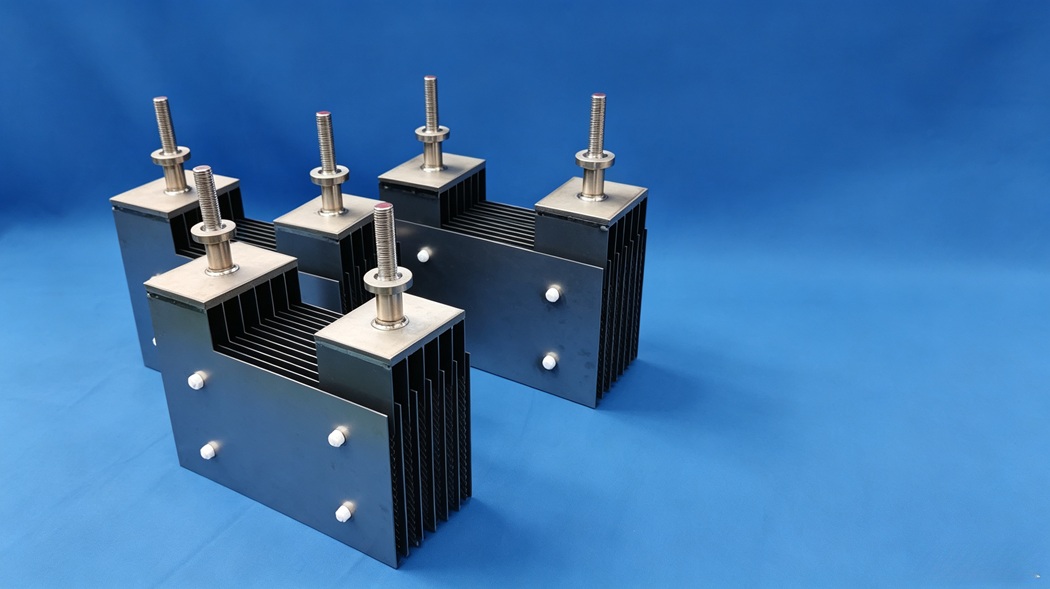
Complex industrial wastewater rapidly degrades standard equipment through localized pitting and extreme pH swings. You protect your water treatment equipment by deploying a Ruthenium Iridium coating Pure Titanium Electrode For Water Treatement.
| Mechanism / Feature | Wastewater Performance Details |
| Acidic Condition Durability | Retains operational integrity across pH 2–12 environments without dissolving. |
| Organic Pollutant Degradation | Generates reactive hydroxyl radicals ($\cdot\text{OH}$) to mineralize complex organic toxins into harmless $\text{CO}_2$ and $\text{H}_2\text{O}$. |
Underground Pipelines and Subsea Infrastructure
Underground pipelines and subsea platforms require reliable long-term protection against aggressive soils and seawater. Non-sacrificial MMO anodes deliver steady current outputs across deep wellbeds and subsea assets. You eliminate costly excavation repairs, prevent pipeline leaks, and guarantee continuous asset integrity over multi-decade lifespans.
MMO Anode Coating Technology solves severe corrosion hazards through exceptional conductivity, chemical stability, and long service life.
Evaluate these key selection criteria for your plant:
• Current density demands
• Electrolyte compatibility
• Overall energy efficiency
Partner with Esegen today to receive custom-engineered DSA electro-chlorination and water treatment solutions.
FAQ
Q:What is the typical operational lifespan of an MMO titanium anode?
A:MMO titanium anodes deliver exceptional longevity. You can expect over 5 years of active coating lifespan and more than 18 years of titanium substrate durability in aggressive media.
Q:How do MMO coatings reduce your plant's energy consumption?
A:MMO coatings lower chlorine evolution overpotential during continuous electrolysis. This reduced voltage requirement maximizes electrocatalytic efficiency and directly cuts your facility's ongoing operational electricity expenses.
Q:Why should you choose MMO anodes for onsite chlorination systems?
A:MMO anodes safely electrolyze brine solutions to generate non-hazardous 0.8% sodium hypochlorite onsite. You eliminate dangerous bulk chemical transportation while maintaining consistent, high-efficiency disinfection performance.
Copyright @ Esegen (Guangzhou) Technology Co., Ltd All Rights Reserved.
 Network Supported