Call us Anytime
+8613570976228


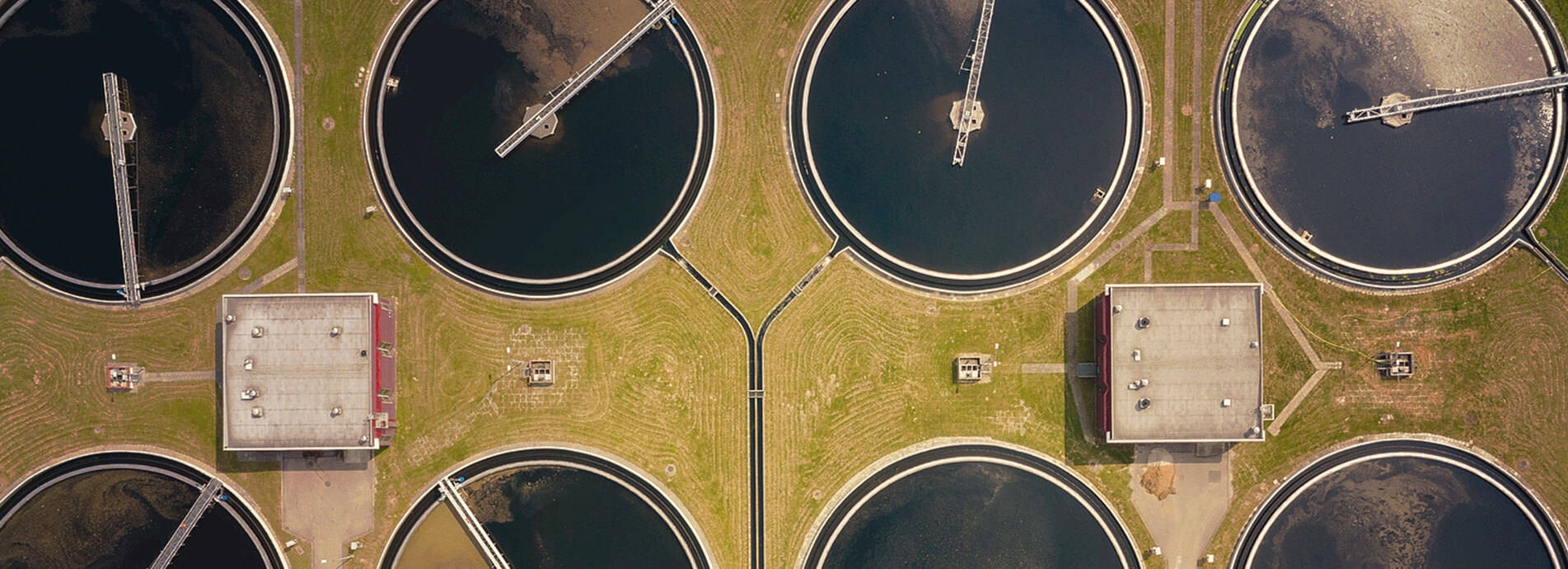

How Does Industrial Ozone Equipment Ensure Safe and Efficient Oxidation in Modern Facilities?
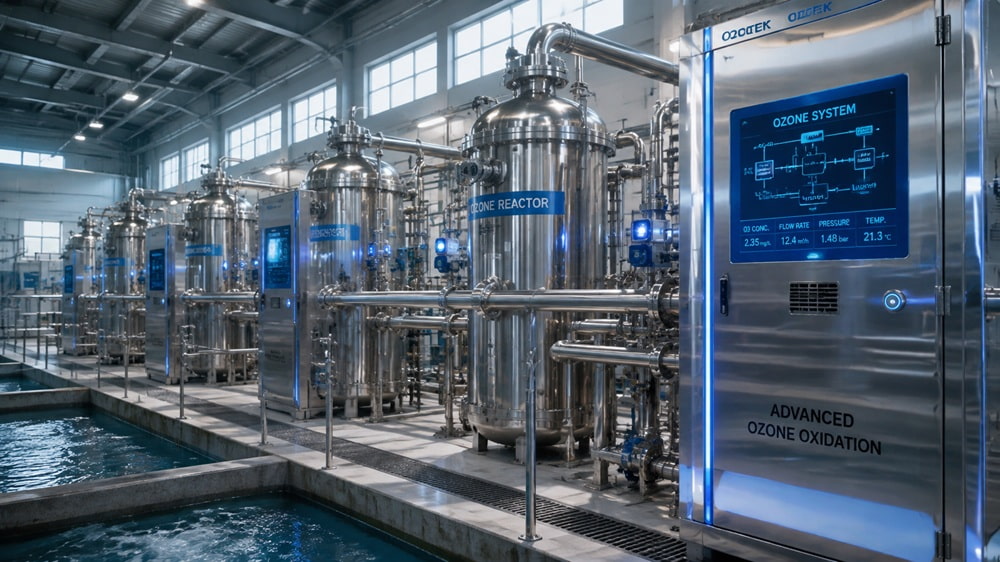
Modern Industrial Ozone Equipment combines physical chemistry with automated controls to protect your facility. You utilize ozone as a superior antimicrobial agent with a high oxidation-reduction potential of 2.07 V. This gas achieves swift microbial inactivation and fast surface decontamination without residues. However, corrosive properties require strict safety controls. Safe industrial applications demand precise water treatment and systematic liquid application. Advanced ozone technology uses closed-loop monitoring for regulatory compliance, maintaining exposure below the OSHA limit of 0.1 ppm TWA. Adopting these safety standards protects your operating team. Direct gas application drives target pathogen inactivation, rapid cell inactivation, thorough equipment decontamination, and effective microbial disinfection during every ozone treatment. Proper ozone treatment optimizes plant operations.
You generate pure triatomic gas inside high-efficiency plasma chambers using modern industrial ozone equipment. This continuous plasma system replicates natural lightning inside controlled dielectric cells. High-voltage electrical fields cleave diatomic oxygen gas into highly active oxygen radicals. These free radicals bond quickly with surrounding oxygen molecules to create triatomic gas. This electrical process drives efficient gas output for your primary ozone application. Precise gas creation supports every critical ozone treatment.
Feed-gas purity directly affects overall ozone stability during continuous generation steps. You must supply clean feed gas with extremely low moisture levels. High moisture levels lower gas creation efficiency and accelerate thermal degradation. Integrated liquid cooling maintains optimal chamber temperature to prevent rapid gas breakdown. Controlled heat preserves production yield during continuous system application. Proper temperature control protects internal dielectric parts during every ozone treatment.
You achieve rapid microbial inactivation through direct molecular oxidation pathways. Triatomic gas ruptures cellular walls to cause instant pathogen inactivation, bacterial inactivation, and complete viral inactivation. This physical wall destruction drives fast cell inactivation across all target pathogens. You utilize advanced ozone technology to deliver superior disinfection and reliable ozone disinfection across every surface application. Plant operators study distinct ozone inactivation mechanisms to improve microbial disinfection and achieve predictable ozone disinfection. Proper direct application supports thorough equipment decontamination during each ozone treatment.
This powerful gas provides clean antimicrobial action without leaving harmful chemical residue. Strong oxidation drives fast target inactivation and rapid inactivation during process application. Continuous ozone treatment improves overall antimicrobial surface decontamination in modern processing lines. Reliable liquid application provides complete surface decontamination during routine plant sanitizing routines. Effective water application secures continuous antimicrobial protection and complete microbial control during industrial application. Your team executes each ozone treatment to maintain complete microbial inactivation across processing lines. Proper gas application ensures complete microbial inactivation for every ozone treatment.
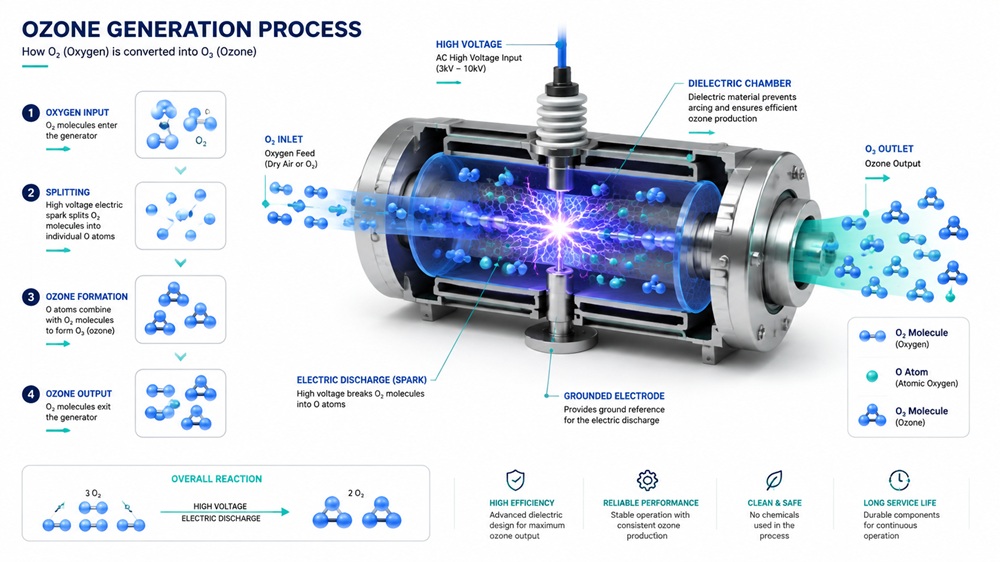
You must manage dielectric heat to protect continuous system performance. Alternating electric fields heat internal dielectric tubes during high-power plasma discharge. Uncontrolled thermal buildup risks severe dielectric breakdown and reduces overall ozone stability. The following thermal factors directly impact your generator hardware:
To mitigate operational stress, robust engineering relies on dedicated liquid cooling networks. Your system maintains active liquid cooling to secure continuous performance during every industrial application. Water-cooled configurations offer critical physical advantages:
Proper cooling stabilizes every target pathogen inactivation, bacterial inactivation, cell inactivation, and viral inactivation process during routine sanitization. Consistent thermal management preserves output for every high-dose application and precise liquid application.
You maintain workplace safety by integrating real-time gas monitoring with automated control systems. Plant operators pair advanced generator systems, such as a Large Horizontal Integrated Ozone Generator, with specialized sensor arrays to continuously audit ambient air quality.
|
Sensor technology |
Detection range / limit |
Accuracy / notes |
|
UV photometer |
0–1 ppm, 0.001 ppm resolution |
Measures gas by UV absorption; does not respond to air or oxygen |
|
Electrochemical sensor |
Similar ranges to UV monitors |
±5% accuracy; widely used in water application systems |
|
Solid state HMOS sensor |
0.02–0.30 ppm |
±20% accuracy; lower cost; alarms require lower setpoints |
OSHA sets the long-term maximum permissible exposure to ozone at 0.10 ppm as an 8-hour time-weighted average (TWA), with a short-term exposure limit of 0.30 ppm over 15 minutes.
To prevent exceeding safety limits, automated control loops execute rapid operational responses:
This rapid automated shut-off guarantees immediate equipment decontamination, rapid pathogen inactivation, reliable microbial inactivation, swift cell inactivation, and thorough viral inactivation without exposing facility workers to hazardous gas leaks. Modern closed-loop controls deliver dependable bacterial inactivation during every sanitizing application, surface application, and water treatment application. Every precise ozone treatment depends on these safeguards. Controlled gas dosing enhances protection during each scheduled ozone treatment, continuous ozone treatment, and targeted ozone treatment. Every integrated safety system protects personnel while optimizing daily ozone treatment operations across your entire facility application. Plant managers select proper equipment application parameters to ensure continuous safety.
You optimize gas-liquid dissolution efficiency and structural access by deploying a Large Horizontal Integrated Ozone Generator. Horizontal geometry lowers vibration levels and simplifies routine maintenance across every industrial ozone equipment application. Commercial plants choose equipment across varied capacity ranges:
|
Product Model |
Production Capacity |
|
TPF Series |
1–75 kg O3/h |
|
GRV Series |
10–150 kg O3/h |
|
Ozonia XF/OF Series |
>300 kg O3/h |
You raise internal operating pressure from 1 atm to 2 atm to boost dissolution performance during water treatment operations. Higher operating pressure increases equilibrium solubility from ~0.57 mg/L to ~1.14 mg/L at 20°C. This pressure shift raises mass transfer efficiency from 60–70% up to 90–98%, while reducing off-gas loss from 20–40% down below 5–10%. High-pressure gas transfer accelerates target pathogen inactivation, bacterial inactivation, cell inactivation, and viral inactivation. Reliable pressure containment supports continuous microbial inactivation during every routine ozone treatment. Controlled gas mixing stabilizes ozone stability throughout every target application.
You select premium anti-corrosion materials to prevent hardware degradation during high-concentration gas delivery. Structural components utilize 316L stainless steel for metal housings and PTFE for flexible seals. Both materials hold an A rating for continuous exposure up to 12 wt% gas concentration and 5 ppm dissolved liquid concentration. Automated pressure-relief valves prevent dangerous over-pressurization during continuous ozone treatment. Proper material selection ensures long-term cell inactivation, viral inactivation, swift pathogen inactivation, and complete microbial inactivation.
You integrate advanced contactor design and venturi injectors requiring a 20–30 psi pressure differential. Proper differential pressure maximizes gas entrainment during every ozone application to improve overall ozone application efficiency. Plant engineers implement this reliable technology to maintain consistent bacterial inactivation. System operators rely on precise gas dosing for effective water application, liquid application, industrial application, facility application, sanitizing application, and process application. Each automated ozone treatment achieves high-level disinfection. You execute each ozone treatment, secondary ozone treatment, and primary ozone treatment with absolute safety.
You must neutralize residual ozone gas from every process line. Installing a dedicated Exhaust Decomposition Machine prevents untreated gas release during your daily air purification routines. The machine uses manganese dioxide and copper oxide catalysts to convert residual gas back into oxygen. This rapid reaction achieves total air decontamination before atmospheric venting.
High-flow gas streams often require thermal destruction hardware.
In the reaction chamber the gases are heated up to around 400°C which radically reduces the half-life of the ozone molecule and, consequently, accelerates the decomposition rate so that the ozone content in the gas stream leaving the Ozonia ODT is well below the recognized safety limits (<0.1 ppm).
This thermal processing protects plant assets during water application and gas application. Robust destruction units secure continuous bacterial inactivation, cellular inactivation, target pathogen inactivation, and complete viral inactivation. Safe ozone destruction preserves workplace health.
You protect facility personnel by enforcing strict exposure limits and continuous air monitoring. Federal health guidelines define key operational parameters:
|
Exposure limit |
Value |
Details |
|
NIOSH REL |
0.1 ppm (0.2 mg/m³) |
Ceiling limit |
|
IDLH |
5 ppm |
Revised IDLH based on acute inhalation toxicity data in humans |
Adhering to legal standards guarantees operational safety across every primary ozone treatment step. Ambient monitors trigger automatic safety shut-offs whenever ambient ozone levels exceed regulatory limits.
Central controllers execute immediate shutdown procedures across your liquid application, sanitizing application, industrial application, process application, facility application, surface application, system application, and field application. Halting continuous ozone output allows immediate equipment decontamination, surface decontamination, and structural decontamination. Each scheduled ozone treatment, targeted ozone treatment, secondary ozone treatment, and continuous ozone treatment delivers reliable microbial inactivation, direct pathogen inactivation, cell inactivation, fast cell inactivation, rapid inactivation, and complete microbial inactivation safely.
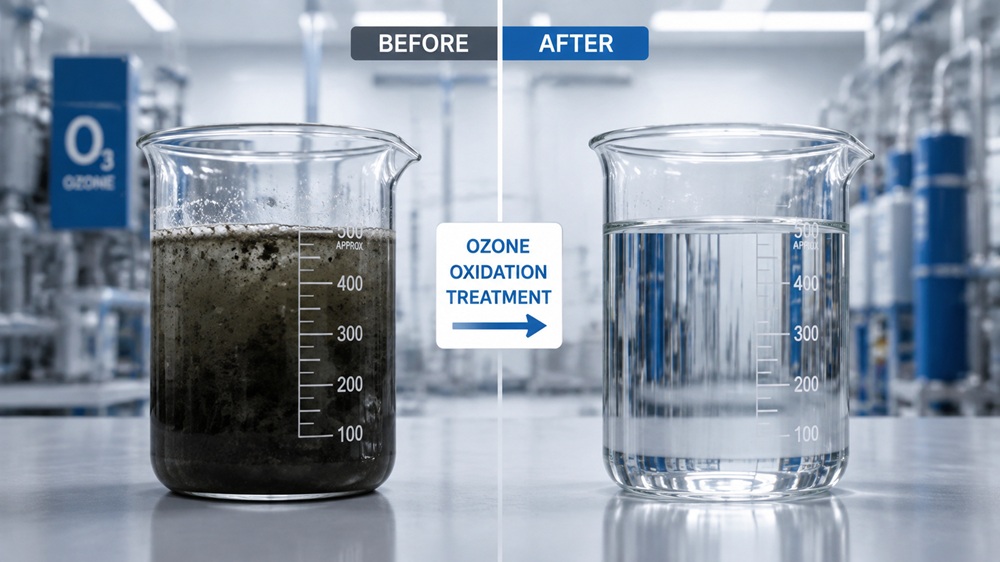
You deploy industrial ozone equipment across modern municipal utilities, chemical plants, healthcare facilities, and cooling towers. Water treatment systems inject gas directly into liquid streams. Municipal wastewater disinfection requires a typical dose of 5–8 mg/L. Advanced oxidation testing uses a dose of 5–20 mg/L, where an optimal 10 ppm setting delivers antimicrobial surface decontamination. Plant operators execute every precise ozone treatment to maintain safety standards.
|
Industry |
Water treatment |
|
Municipal utilities |
Drinking water disinfection and discharge compliance |
|
Chemical manufacturing |
Reaction enhancement in process water |
|
Healthcare |
Disinfection of facility water systems |
Continuous ozone treatment drives rapid microbial inactivation, pathogen inactivation, cell inactivation, and viral inactivation. This ozone application removes organic contaminants, eliminates biofilm, and controls scaling inside cooling towers. Plant managers choose routine ozone disinfection to secure antimicrobial control. Liquid contact ensures continuous microbial inactivation during water treatment. Direct gas injection secures rapid bacterial inactivation during each scheduled ozone treatment.
You integrate air purification systems into central HVAC return ducts across industrial applications. These air purification units perform space decontamination during maintenance shutdowns. Integrated destruction modules keep exhaust air below 0.1 ppm ozone to protect safety. Commercial facilities select modules spanning airflow capacities from 100 CFM to 7,500 CFM. Controlled ozone treatment drives rapid microbial inactivation, surface decontamination, cell inactivation, and viral inactivation.
|
Industry |
Facility air sanitation |
|
Food processing |
Odor removal and microbial control in storage |
|
Healthcare |
Room sterilization and equipment decontamination |
|
Commercial facilities |
Air quality management and odor control |
Every target surface requires gas contact for microbial inactivation across processing rooms. Staff implement decontamination applications to maintain surface cleanliness across plant lines. Each scheduled ozone treatment achieves predictable ozone disinfection across machinery. Process engineers rely on secondary ozone treatment routines for surface decontamination. Proper gas contact delivers antimicrobial action, fast cell inactivation, and equipment decontamination. You execute primary ozone treatment and targeted ozone treatment against microbial targets. Proper surface application, process application, sanitizing application, system application, liquid application, and industrial application ensure plant decontamination and healthcare equipment decontamination. You manage every ozone treatment to guarantee antimicrobial surface protection, surface sanitization, surface sterilization, and microbial control.
Combining plasma physics with mechanical controls guarantees high oxidation rates and safety compliance. Thermal regulation, catalytic destruction, and containment eliminate residue, corrosion, and exposure risks. Deploying industrial ozone equipment delivers key safety benefits during every facility application. Advanced ozone technology drives pathogen inactivation, viral inactivation, cell inactivation, bacterial inactivation, microbial inactivation, rapid inactivation, continuous inactivation, direct inactivation, target inactivation, and reliable inactivation across every process application. You execute precise ozone treatment routines during each liquid application, surface application, water application, field application, system application, sanitizing application, primary application, and industrial application. Pure ozone gas output maximizes ozone efficiency. Each effective ozone treatment secures operations, while scheduled ozone treatment ensures workplace protection.
You achieve rapid surface decontamination and microbial inactivation across your facility. Triatomic gas destroys microbial contaminants instantly. This physical process drives swift target inactivation, cell inactivation, and viral inactivation. You secure antimicrobial surface protection without chemical residues during daily ozone application.
Medical teams utilize ozone disinfection for thorough equipment decontamination. You eliminate dangerous microbial threats on every hard surface. Rapid pathogen inactivation and rapid inactivation protect vital clinical environments. This process improves operational safety without leaving toxic chemical residues on specialized tools.
You integrate oxidation systems into water treatment and process lines. Gas injection causes immediate microbial inactivation and rapid cell inactivation. Effective surface decontamination destroys stubborn microbial biofilm. Continuous liquid treatment delivers strong antimicrobial control across food processing lines and large healthcare facilities.
You apply direct gas streams to ensure fast surface decontamination. Continuous exposure drives total microbial inactivation, bacterial inactivation, and complete structural decontamination. Strong antimicrobial action neutralizes pathogen targets on every processing surface. Routine liquid contact maintains high surface cleanliness across plant lines.
Copyright @ Esegen (Guangzhou) Technology Co., Ltd All Rights Reserved.
 Network Supported