What is the Basic Process of Fenton Treatment
The Fenton oxidation process is primarily categorized by researchers into four stages: adjusting the solution pH to 3-4, initiating the oxidation reaction, neutralizing the solution to a pH of 7-8, and flocculation/precipitation.
Fenton Process Flow Diagram
-
Fenton's Reagent: Standard Fenton's reagent refers to a homogeneous liquid system composed of hydrogen peroxide and ferrous ions. Based on the standard reagent, a series of Fenton-like reagent methods with similar mechanisms are derived by altering and coupling reaction conditions, such as Electro-Fenton, Photo-Fenton, Ultrasound-Fenton, and Microwave-Fenton methods.
-
Acid Adjustment (pH Adjustment): This refers to the process of adding concentrated or dilute sulfuric acid to adjust the wastewater pH to an acidic range suitable for the Fenton oxidation reaction.
-
During this stage, methods such as hydraulic mixing, mechanical stirring, or air agitation are generally employed to accelerate the diffusion and thorough mixing of the acid with the influent water. The mixing time should not be less than 2 minutes.
-
Catalyst Mixing: This refers to the process step of adding the catalyst and ensuring its thorough mixing with the wastewater.
-
During this stage, FeSO₄ solution (or iron minerals, zero-valent iron) is typically added quantitatively via a dosing pump as the catalyst. Methods such as hydraulic mixing, mechanical stirring, or air agitation are used to accelerate the diffusion and thorough mixing of ferrous sulfate with the influent water. The mixing time should not be less than 2 minutes.
-
Fenton Oxidation: This refers to the process where Fenton's reagent generates hydroxyl radicals under acidic conditions, destroying the structure of organic matter and ultimately oxidizing/decomposing it.
-
Oxidation Reaction: This refers to the process step of adding the oxidant (hydrogen peroxide), thoroughly mixing it with the wastewater, and allowing Fenton oxidation to occur in the presence of the catalyst, thereby oxidizing and decomposing organic matter in the wastewater.
-
During this stage, the hydraulic retention time should be determined based on raw water quality (CODcr, pH, SS, etc.), pollutant characteristics, and discharge requirements. The reaction tank should preferably consist of no fewer than 2 stages (to avoid short-circuiting or operational errors leading to insufficient oxidation reaction time).
-
Neutralization: This refers to the process of adjusting the pH of the effluent from the oxidation reaction tank to meet the requirements of subsequent treatment processes or discharge standards, typically adjusting the pH to 7-8.
Fenton Technique Innovation
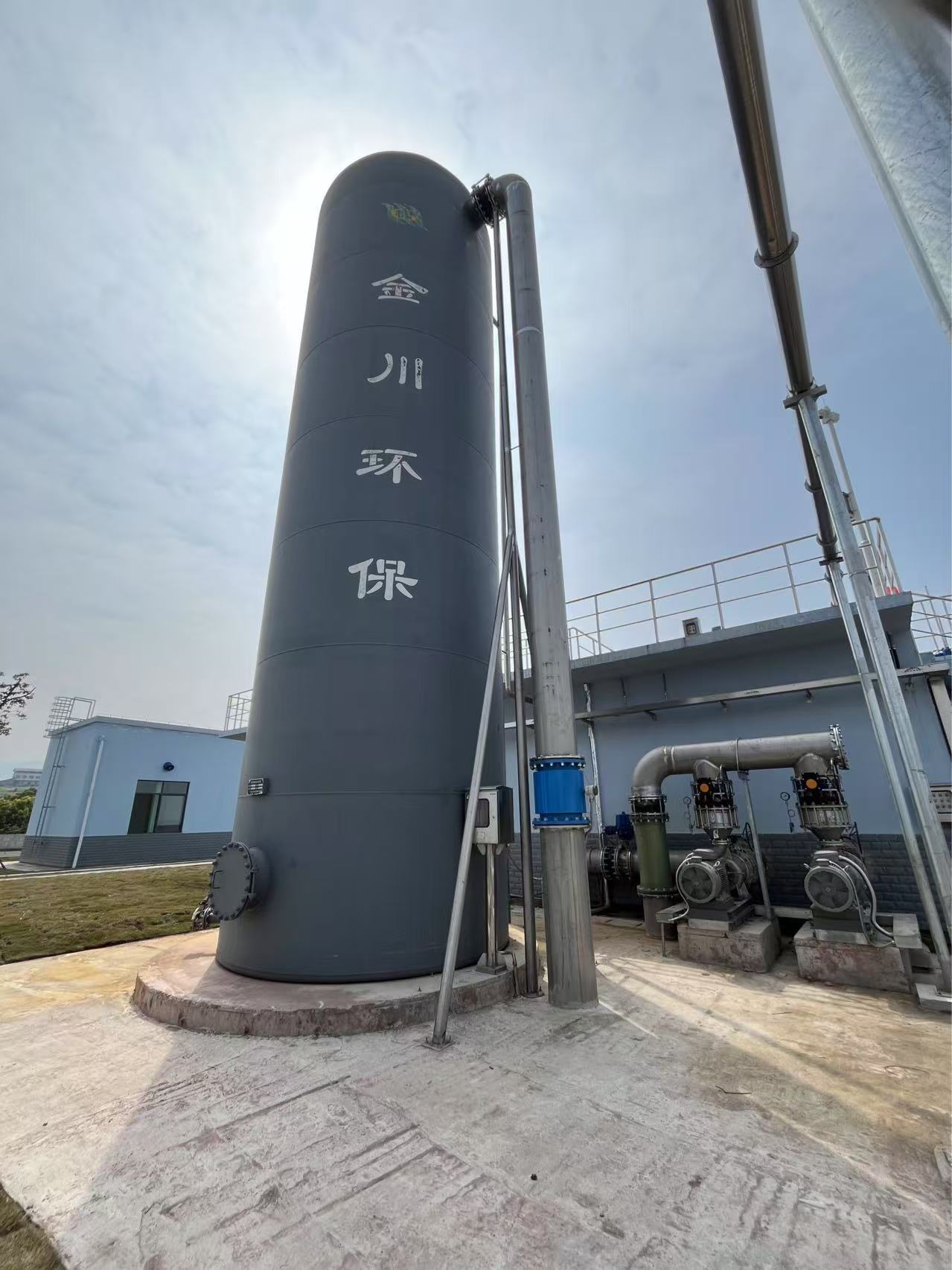
Fenton 1.0 - Traditional Fenton: essentially a combination of chemical dosing equipment.
Fenton 2.0 - Fluidized Bed Fenton: Utilizes media to generate more hydroxyl radicals.
Fenton 3.0 - Magnetic Fenton: Significantly reduces ineffective hydroxyl radicals and thus greatly enhances the hydroxyl radical utilization rate through magnetic technology.
|
Comparative Overview of Three Fenton Generations
|
|
Technique
|
Process Characteristic
|
Operation Characteristic
|
|
Fenton 1.0 Traditional Fenton
|
1. No reactor+ no media
2. High chemical consumption
3. Combination of dosing system
|
1. Low COD removal rate, high operation cost
2. High sludge generation
3. High dependent on the site operator
|
|
Fenton 2.0 Fluidized Bed Fenton
|
1. Reactor + Media(catalyst)
2. Utilizes media (such as quartz sand/iron-carbon catalytic materials) to promote the generation of more hydroxyl radicals, thereby enhancing oxidation efficiency.
|
1. Request media, should be replaced as consumable material ( cost 0.1 RMB/ton of water)
2. High failure rate, reactor is prone to clumping and clogging
3. H2O2 over dosage, should equipped with degassing device;
4.Can not stop running
|
| Fenton 3.0 Magnetic Fenton |
1. Reactor+ No media
2. Low chemical consumption, power consumption and sludge generation
|
1. Ultra Low comprehensive operation cost;
2. Zero failure, Zero maintenance, Continuous operation
3. Low H2O2 dosage, no need degassing device
4. Run and stop in any time, full automatic running;
|
Jinchuan Magnetic Fenton process have the below unique specifications:
- Zero Failure
- No need Media as catalyst
- Low Chemical Comsumption
- Low Power Consumption
- Low Sludge Generation



 Network Supported