Call us Anytime
+8613570976228



Why Water Treatment Plants Choose Salt Water Sodium Hypochlorite Generators
Water treatment plants worldwide face increasing pressure to balance strict safety regulations with operational cost efficiency. You can eliminate the severe risks of handling bulk chlorine gas by upgrading to an advanced salt water sodium hypochlorite generator. By utilizing precise electrolysis driven by high-performance MMO anodes, these systems produce reliable disinfection solutions onsite. Esegen delivers custom-engineered electro-chlorination technology to solve your hardest water treatment challenges while dramatically lowering long-term operating expenses and ensuring uninterrupted municipal or industrial water supplies.
Key Takeaways
• Onsite generation eliminates hazardous bulk chlorine transportation and storage risks
• Advanced MMO titanium electrodes ensure continuous, low-cost hypochlorite production
• Generating a stable 0.8% sodium hypochlorite solution ensures safe, operator-friendly daily maintenance
• Modular skid designs integrate seamlessly with existing SCADA monitoring systems for automated dosing
The Shift from Dangerous Chemicals to Onsite Generation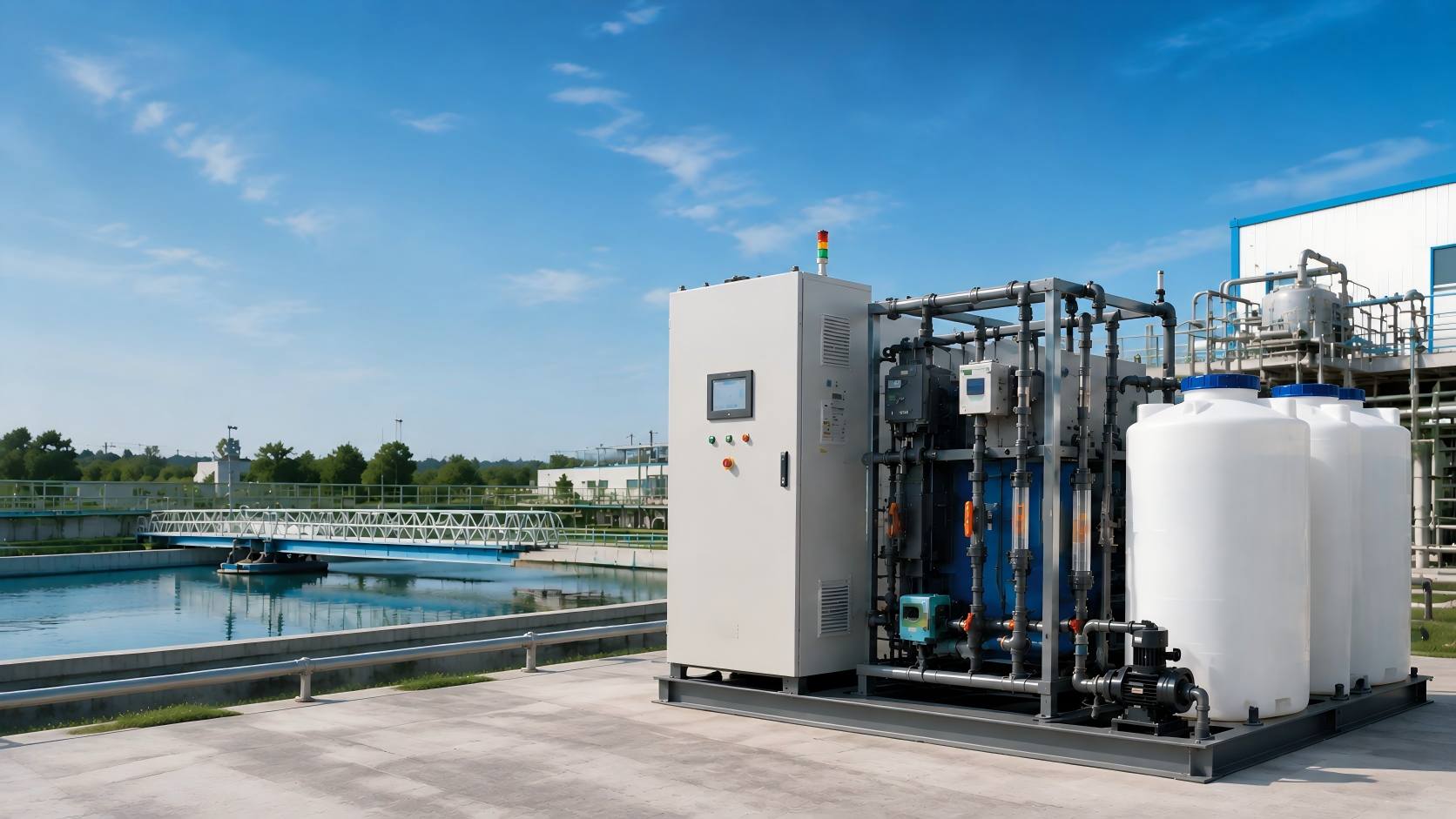
Legacy disinfection methods rely heavily on pressurized chlorine gas or high-concentration commercial liquid bleach (12% to 15%). These traditional chemicals present massive operational hazards, requiring specialized hazmat training, extensive safety protocols, and stringent regulatory reporting. In contrast, onsite salt water sodium hypochlorite generators transform harmless raw materials—salt, water, and electricity—into a stable disinfectant exactly when you need it.
By switching to onsite generation, you unlock three primary facility advantages:
• Absolute Operator Safety: You completely remove toxic gas leak threats and eliminate the need for costly scrubber systems or emergency containment infrastructure.
• Supply Chain Independence: You secure your plant's operation against chemical supply shortages, trucking delays, and fluctuating market prices for commercial chlorine.
• Reduced Disinfection Byproducts: The fresh 0.8% solution degrades much slower than commercial bulk bleach, minimizing the formation of harmful chlorates and bromates in your drinking water supply.
How the Electrolytic Process Works
The core of the system is the electrolytic cell. When a direct current passes through a diluted brine (saltwater) solution, it triggers a precise electrochemical reaction.
Because the concentration remains at a safe 0.8%, it falls below the 1% threshold for hazardous materials. This classification eases compliance burdens and entirely removes the need for Risk Management Plans (RMP).
| Disinfection Method | Safety Profile | Regulatory Compliance |
| Chlorine Gas | High Risk: Toxic and potentially fatal if leaked. Requires SCBA gear. | Strict Risk Management Plans (RMP) required by EPA/OSHA. |
| Onsite Sodium Hypochlorite (0.8%) | Low Risk: Non-hazardous classification. Safe for routine handling. | Minimal reporting requirements. Eliminates hazmat protocols. |
The Heart of the System: Esegen's MMO Titanium Anodes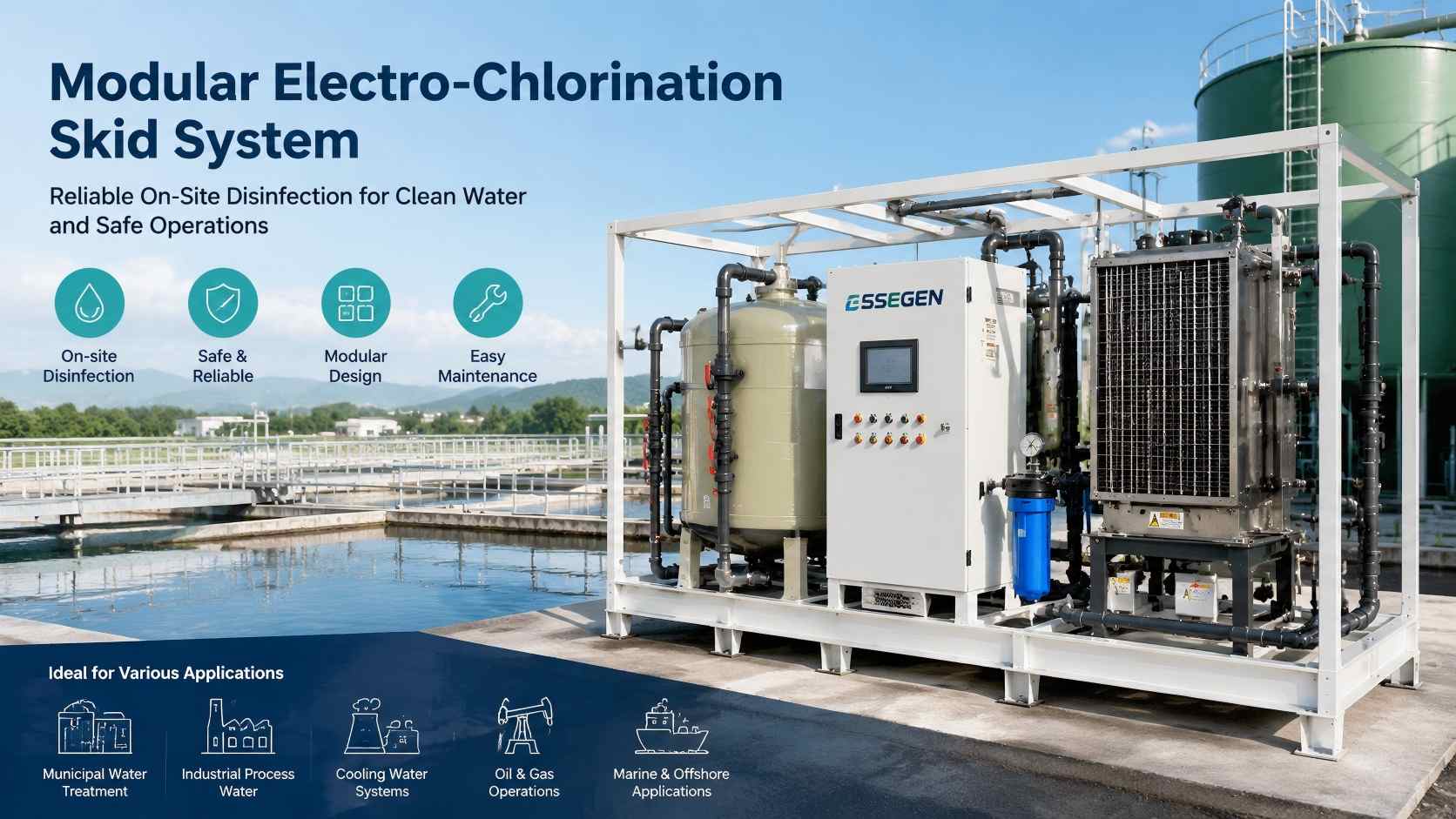
A salt water generator is only as reliable as its internal electrodes. Esegen utilizes premium Dimensionally Stable Anodes (DSA) featuring a pure titanium substrate (ASTM B265 Grade 1 or 2) coated with Mixed Metal Oxides (MMO), such as Ruthenium and Iridium. This advanced MMO Anode Coating Technology ensures the electrolytic cells can withstand continuous, high-current operations in high-chloride environments without physical degradation.
Standard metals would dissolve rapidly under these harsh conditions. Esegen's pure titanium core self-passivates, retaining its structural integrity, while the active ruthenium-iridium coating drives the chlorine evolution reaction with incredibly low overpotential. The non-sacrificial nature of these anodes means there is zero metal sloughing, ensuring your final disinfectant remains pure and free of heavy metal contamination.
Advanced Maintenance and Scale Prevention
One of the traditional challenges of saltwater electrolysis is the accumulation of calcium and magnesium scales on the cathode surface. Modern systems combat this through intelligent design. Implementing a Ruthenium Iridium coating Pure Titanium Electrode For Water Treatement allows for specialized polarity reversal functions. By periodically reversing the electrical current, the system naturally repels scale buildup, drastically extending the time between manual acid washings. This self-cleaning capability maximizes uptime and reduces the labor burden on plant operators.
Water Quality Improvements and Community Impact
The ultimate goal of any water treatment plant is public health. Commercial bulk bleach contains a high concentration of sodium hydroxide, which significantly raises the pH of the treated water and can lead to scaling in municipal pipes. The 0.8% onsite hypochlorite solution operates at a much lower, more neutral pH. This preserves the natural chemical balance of the water, enhances the efficiency of the active chlorine, and significantly reduces the chemical taste and odor often associated with municipal tap water.
Environmental Benefits and Carbon Footprint Reduction
Beyond plant safety, onsite generation offers massive environmental benefits. Delivering bulk chlorine or commercial bleach requires heavy-duty tanker trucks traveling hundreds of miles from chemical manufacturing plants to your facility. By generating hypochlorite onsite, you completely eliminate the Scope 3 carbon emissions associated with this hazardous freight transport. Furthermore, because you are only producing what you need on demand, there is no chemical waste associated with degraded, expired bulk bleach that must be neutralized and disposed of safely.
Modular Design and Scalable System Integration
Modern water treatment demands flexibility. Esegen engineers these electro-chlorination systems as modular, skid-mounted units. Whether you operate a rural municipal well site requiring 10 pounds per day, or a massive metropolitan water treatment plant requiring thousands of pounds per day, the systems scale seamlessly.
These units feature smart PLC controls and integrate directly with your plant's SCADA system. This allows operators to monitor real-time brine flow, cell voltage, and chlorine output remotely. Automated pacing ensures that the generator ramps production up or down automatically based on real-time water flow rates and chlorine demand signals.
Long-Term Cost Efficiency and ROI
While adopting onsite generation requires an initial capital investment, the return on investment (ROI) is exceptionally rapid—often realized within 2 to 4 years. You permanently eliminate ongoing expenses related to chemical delivery fees, hazardous material insurance premiums, and specialized safety equipment maintenance. Because industrial-grade salt and electricity are significantly cheaper and more price-stable than refined commercial chemicals, your cost-per-pound of active chlorine drops dramatically.
| Cost Factor | Commercial Bulk Bleach (12-15%) | Onsite Generation (0.8%) |
| Raw Material Costs | High (subject to chemical market volatility) | Low (requires only food-grade salt and water) |
| Storage & Degradation | Loses up to 20% potency in 30 days | Generated on-demand; zero potency loss |
| Safety Overhead | High (Hazmat training, special insurance, RMP) | Minimal (Standard industrial operations) |
Conclusion
Water treatment plants choose salt water sodium hypochlorite generators because they provide an uncompromising balance of safety, operational autonomy, environmental responsibility, and long-term cost savings. By integrating Esegen's high-efficiency MMO titanium electrodes, these systems deliver decades of reliable service with minimal maintenance. Upgrade your infrastructure today to protect your operators, your community, and your bottom line.
FAQ
Q: Is the sodium hypochlorite produced onsite as effective as commercial bleach?
A: Yes. The active disinfecting agent is identical. In fact, because the 0.8% onsite solution does not degrade rapidly during storage like bulk 15% bleach, its dosing remains far more consistent and predictable.
Q: How much salt is required to generate the hypochlorite?
A: Generally, it takes about 3 to 3.5 pounds of high-purity salt (and roughly 2 to 2.5 kilowatt-hours of electricity) to produce one pound of equivalent free available chlorine (FAC).
Q: Why are MMO titanium anodes essential for this equipment?
A: Standard metals corrode immediately during saltwater electrolysis. MMO titanium anodes utilize a pure titanium base for dimensional stability and a noble metal oxide coating to efficiently catalyze chlorine production without sacrificing the electrode's physical structure.
Q: Does upgrading to onsite generation disrupt current plant operations?
A: No. Modular skid systems are pre-assembled and factory-tested. They can be installed and integrated into your existing piping and SCADA systems parallel to your current chemical feed, allowing for a seamless transition with zero plant downtime.
Q: What kind of maintenance does a salt water generator require?
A: Routine maintenance is minimal. It primarily involves keeping the brine tank filled with salt, periodically checking water softener levels, and performing a mild acid wash on the electrolytic cell once or twice a year to remove calcium scale buildup.
Copyright @ Esegen (Guangzhou) Technology Co., Ltd All Rights Reserved.
 Network Supported