Call us Anytime
+8613570976228


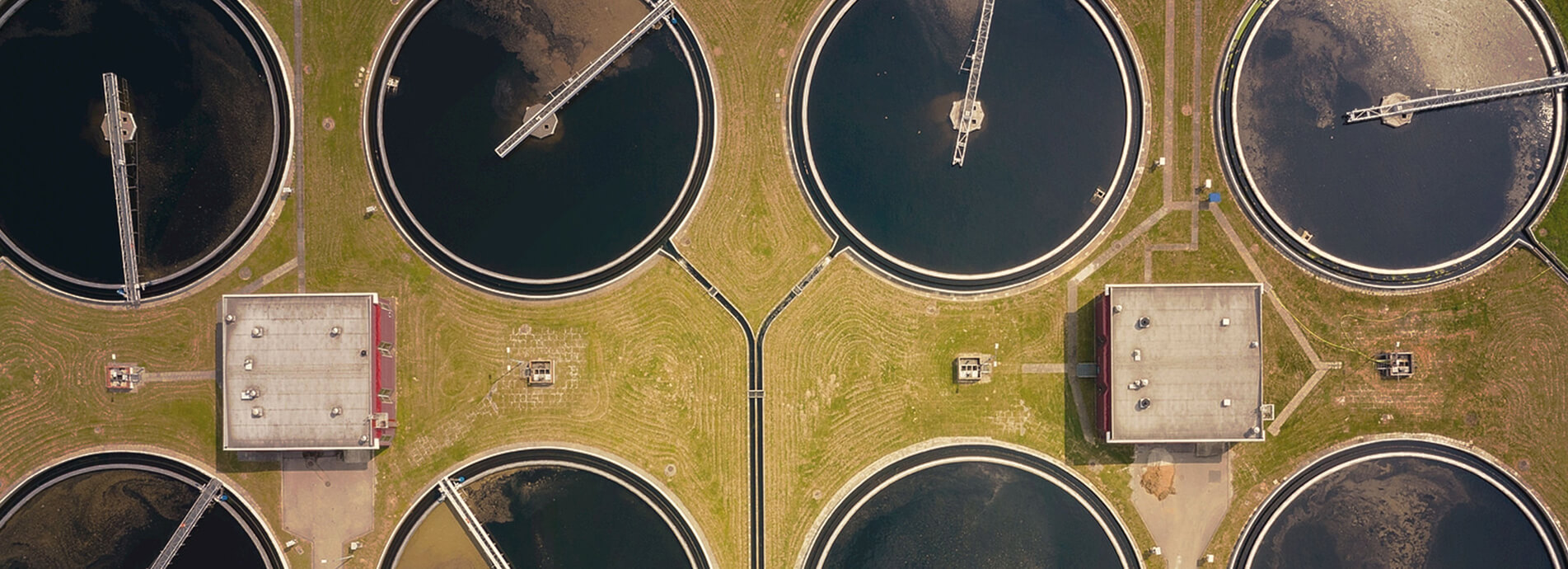

Open Channel vs. Closed Vessel UV Systems: Which Configuration Fits Your Plant?
Choosing the right UV disinfection system is an important step in designing an efficient water treatment plant. For municipal wastewater facilities and industrial water treatment projects, two common configurations are open channel UV systems and closed vessel UV systems. Although both use ultraviolet radiation to inactivate microorganisms, their installation structures, hydraulic conditions, and applications are quite different.
Which configuration is better for your plant? Open channel UV systems are generally suitable for large wastewater treatment facilities with gravity-flow channels, while closed vessel UV systems are often preferred for enclosed pipelines, industrial processes, and installations with limited space. The best choice depends on flow rate, water quality, UV transmittance, required disinfection dose, and site conditions.
Esegen, through its Purevita UV Sterilization Technology, provides UV disinfection equipment for different water treatment requirements. Understanding the following differences will help engineers and plant operators identify a suitable solution.
An open channel UV disinfection system treats wastewater as it flows through an open channel. Multiple UV lamp modules are installed inside the channel, allowing water to pass through the irradiation area. This configuration is commonly used after biological treatment and clarification in municipal wastewater treatment plants.
A closed vessel UV system treats water inside an enclosed reactor or stainless steel chamber. UV lamps are protected by quartz sleeves, while water flows through the treatment chamber under controlled hydraulic conditions. This arrangement is suitable for pipeline applications and industrial water treatment processes.

Both configurations use UV-C radiation to damage the genetic material of microorganisms, preventing them from reproducing. Esegen's Purevita UV technology includes low-pressure UV equipment operating around the germicidal wavelength of 253.6–253.7nm.
The main difference is how water enters, passes through, and leaves the UV treatment area. This affects equipment installation, hydraulic design, maintenance access, and overall project cost.
| Comparison | Open Channel UV | Closed Vessel UV |
|---|---|---|
| Installation | Open channel | Enclosed reactor |
| Water flow | Usually gravity-driven | Usually pumped |
| Typical application | Municipal wastewater | Industrial and pipeline water |
| Space requirements | Requires channel space | Compact installation |
| Maintenance | Channel module access | Reactor access |
| Hydraulic design | Channel depth and flow distribution | Pressure and reactor flow |
Neither configuration is automatically more efficient. Proper sizing, UV dose delivery, water quality, and hydraulic performance determine the actual disinfection results.
An open channel UV system is particularly suitable for municipal wastewater treatment plants, industrial wastewater facilities, and large-scale effluent disinfection projects.
Its main advantage is the ability to accommodate multiple UV lamp modules across a treatment channel. This arrangement supports continuous treatment of substantial wastewater volumes and can be integrated into existing gravity-flow treatment processes.
For example, Esegen's Low Pressure Open Channel UV System is designed for wastewater treatment applications. According to its published product specifications, a reference configuration includes a water flow capacity of 10,000 m³/day, 24–32 lamps, four module sets, and a total power rating of 10 kW.

The system also incorporates hydraulic optimization and automatic quartz sleeve cleaning technologies to support stable operation and maintenance. These features are particularly relevant for wastewater environments where suspended solids and deposits can reduce UV transmission.
For municipal projects requiring continuous effluent disinfection, explore Esegen's Low Pressure Open Channel UV System for further technical information.
A closed vessel UV system is often a practical option when water needs to be disinfected inside an enclosed pipeline or controlled treatment process. Typical applications include industrial process water, drinking water treatment, commercial water systems, and selected wastewater treatment processes.
Its enclosed structure makes installation easier where an open channel is unavailable. It can also be integrated into existing pipework, provided that the pipeline pressure, flow rate, and reactor hydraulic requirements are compatible.
Esegen's Closed Vessel UV System range includes low-pressure tube-type equipment designed for flowing water disinfection. The published product information describes UV-C treatment at approximately 253.7nm, together with quartz sleeve cleaning and enclosed reactor construction.
For projects requiring different UV lamp technologies, medium-pressure equipment may also be considered. Esegen's Medium Pressure UV System range provides another configuration for evaluating specific disinfection requirements.
Before choosing between open channel and closed vessel UV disinfection, engineers should evaluate several operating parameters.
Flow rate: Consider both average and peak flow. The equipment must deliver the required UV dose under the maximum expected operating conditions.
UV transmittance: Low UV transmittance reduces the amount of radiation available for disinfection. Wastewater quality should be assessed before determining lamp capacity.
Turbidity and suspended solids: Particles can absorb or scatter UV radiation and shield microorganisms. Effective pretreatment can improve disinfection reliability.
Required UV dose: The appropriate dose depends on target microorganisms, discharge standards, water reuse requirements, and project specifications.
Installation conditions: Evaluate channel dimensions, pipeline pressure, available space, electrical supply, and maintenance access.
Operating costs: Lamp replacement, energy consumption, quartz sleeve cleaning, and spare parts should all be included in the lifecycle cost assessment.
These parameters should be evaluated together. A higher lamp power rating alone does not guarantee better disinfection performance.
Esegen (Guangzhou) Technology Co., Ltd. specializes in environmental protection equipment research, development, engineering design, and manufacturing. Its product portfolio includes UV sterilization, electrolysis, catalytic oxidation, and other water treatment technologies.
Under its Purevita UV Sterilization Technology, Esegen provides different UV configurations for municipal and industrial applications. Its product range covers open channel UV systems, low-pressure closed vessel UV systems, and medium-pressure UV equipment.
For water treatment engineers, this product diversity makes it possible to compare different installation structures and treatment approaches according to actual project requirements.
Rather than selecting a UV sterilizer based only on nominal capacity, customers should provide their water quality, flow rate, and installation conditions to determine a suitable configuration.
Explore the complete Esegen UV Sterilization Technology product portfolio to learn more about available industrial UV disinfection solutions.
Q: What is the main difference between open channel and closed vessel UV systems?
A: Open channel UV systems disinfect water flowing through an open channel using submerged lamp modules. Closed vessel UV systems treat water inside an enclosed reactor connected to a pipeline or treatment process.
Q: Which UV system is better for municipal wastewater treatment?
A: Open channel UV systems are commonly used in municipal wastewater treatment plants because they can accommodate large water volumes and integrate into gravity-flow effluent channels. Final selection depends on flow rate, water quality, and site conditions.
Q: Can closed vessel UV systems treat industrial wastewater?
A: Yes. They can treat suitable industrial wastewater streams when UV transmittance, turbidity, suspended solids, flow rate, and hydraulic conditions meet the design requirements. Pretreatment may be necessary.
Q: What UV wavelength is used for water disinfection?
A: Germicidal UV-C radiation around 253.7nm is widely used for water disinfection. Esegen's Purevita low-pressure UV products specify wavelengths around 253.6–253.7nm.
Q: Does UV disinfection leave residual disinfectant in water?
A: No. UV treatment inactivates microorganisms during irradiation but does not leave a persistent disinfectant residual. Additional treatment may be required when residual protection is needed.
Q: What information is needed to select the right UV sterilization system?
A: Engineers generally need the average and peak flow rates, UV transmittance, turbidity, suspended solids, target microorganisms, required UV dose, installation dimensions, and operating conditions.
Q: Does Esegen supply both open channel and closed vessel UV systems?
A: Yes. Esegen's Purevita UV Sterilization Technology portfolio includes open channel UV systems, low-pressure closed vessel UV systems, and medium-pressure UV equipment for different water treatment applications.
Open channel and closed vessel UV systems serve different engineering requirements. Open channel configurations are often suitable for large-volume municipal wastewater treatment, while closed vessel systems offer a practical solution for enclosed pipelines and industrial water processes.
The right choice depends on your actual flow rate, water quality, UV dose requirements, installation conditions, and long-term operating objectives.
If you are planning a new wastewater treatment project or upgrading an existing disinfection process, Esegen can help you evaluate suitable UV equipment options. Contact the team with your water flow rate, application, and project specifications to discuss an appropriate industrial UV sterilization solution.
Visit: www.esegen.com
Copyright @ Esegen (Guangzhou) Technology Co., Ltd All Rights Reserved.
 Network Supported