Call us Anytime
+8613570976228



How to Choose the Right Water Disinfection System: Sodium Hypochlorite Generator, Electro Chlorination and Ozone Solutions
As environmental regulations tighten and operational efficiency becomes a top priority, selecting the right equipment is critical for EPC contractors, project managers, and water treatment plant engineers. The shift away from hazardous bulk chemicals has led industrial and municipal facilities to explore safer, more sustainable alternatives. However, navigating the technical specifications of different technologies can be complex during the procurement stage. This guide will help you evaluate core technologies and choose the optimal water disinfection system to meet your facility’s capacity, safety requirements, and long-term budget.
Introduction: What is a Water Disinfection System?
At its core, a water disinfection system is an engineered solution designed to deactivate, destroy, or remove pathogenic microorganisms—such as bacteria, viruses, and protozoa—from a water supply. For industrial distributors and plant engineers, modern disinfection is no longer just about adding chlorine; it is about leveraging advanced on-site generation technologies that integrate seamlessly with SCADA systems, ensure regulatory compliance, and lower overall OPEX (Operating Expenses).
Section 1: Sodium Hypochlorite Generator: Safe On-Site Chlorine Production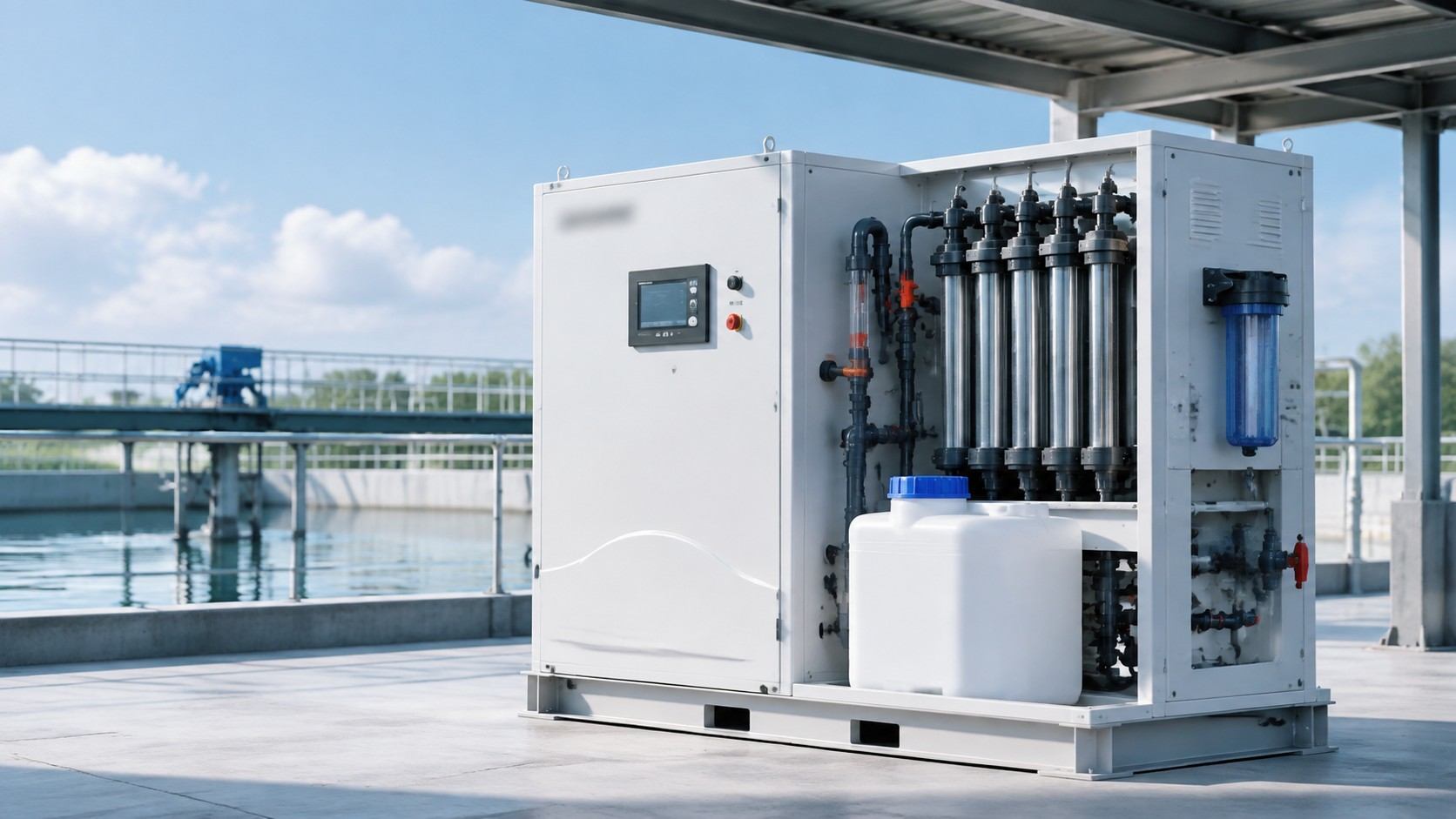
For municipal drinking water plants and medium-to-large industrial facilities, handling pressurized chlorine gas or high-concentration commercial bleach presents severe safety hazards and high supply chain costs. A sodium hypochlorite generator solves this by producing a safe, stable 0.8% disinfection solution directly on-site using only three harmless ingredients: food-grade salt, water, and direct current electricity.
Key Engineering Advantages:
• Operator Safety & Compliance: The 0.8% concentration falls well below the hazardous material threshold, entirely eliminating the need for Risk Management Plans (RMP), specialized Hazmat training, and expensive leak scrubber systems.
• Predictable OPEX: By detaching your facility from volatile chemical market prices and eliminating hazardous freight delivery fees, the cost per pound of free available chlorine (FAC) drops significantly, ensuring a rapid ROI for project managers.
• Product Stability: Unlike bulk commercial bleach (12-15%) which degrades quickly and loses potency over time, on-site generated hypochlorite retains its exact concentration, ensuring accurate automated dosing without constant calibration adjustments.
Section 2: Electro Chlorination System: Reliable Disinfection for Large-Scale Applications
When dealing with massive water volumes—such as coastal power plant cooling towers, desalination plants, or large offshore platforms—procurement teams require highly scalable and robust solutions. An electro chlorination system is designed for these heavy-duty, large-scale applications, often utilizing direct seawater electrolysis rather than prepared brine.
Key Engineering Advantages:
• Seawater Utilization: For coastal and offshore facilities, the system uses the naturally occurring chlorides in seawater. This means zero raw material costs for salt, dramatically reducing operational logistics and supply chain dependencies.
• Biofouling Prevention: These systems are critical for continuously preventing marine growth (like barnacles and algae) inside massive cooling water intake structures and heat exchangers, maintaining optimal thermal efficiency for power generation.
• High Capacity & Durability: Built with premium Dimensionally Stable Anodes (DSA), these systems are engineered to handle extremely high current densities and run continuously for decades in highly corrosive marine environments.
Section 3: Ozone Water Treatment System: Advanced Oxidation and Chemical-Free Treatment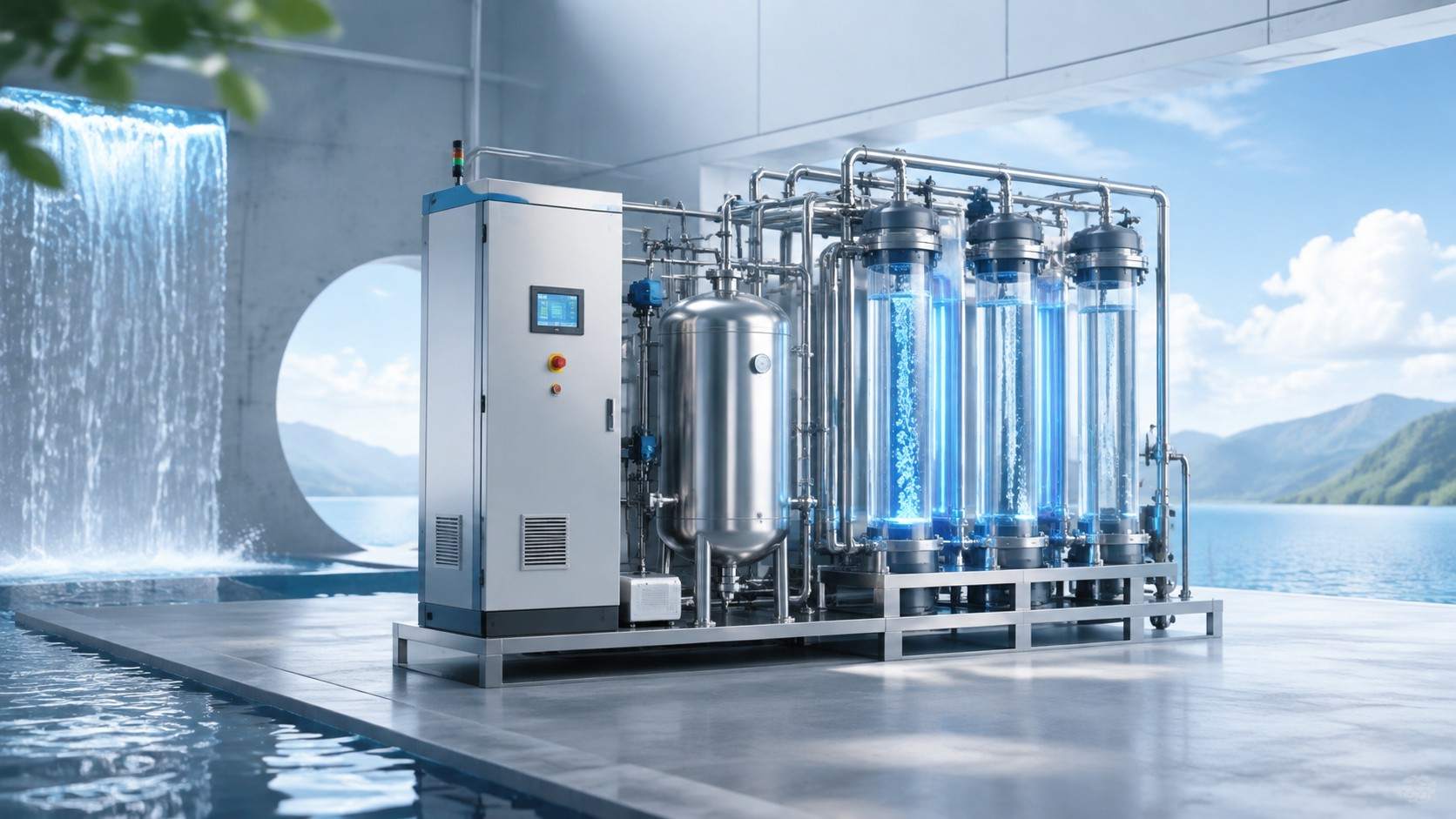
While chlorine-based systems leave a residual for long-term protection, some specialized applications require immediate, incredibly powerful oxidation without leaving any chemical trace. Incorporating an ozone generator provides advanced oxidation by converting ambient oxygen ($O_2$) into ozone gas ($O_3$). Ozone is one of the strongest commercially available disinfectants, acting much faster than chlorine.
Key Engineering Advantages:
• Superior Oxidation Potential: Ozone instantly destroys cell walls of complex pathogens (including chlorine-resistant Cryptosporidium) and breaks down micro-pollutants, pharmaceuticals, and complex organic compounds.
• Taste and Odor Control: Because ozone leaves no chemical residual—reverting quickly back to natural oxygen—it is the premier choice for food & beverage processing, bottled water plants, and high-end municipal drinking water facilities looking to eliminate chemical tastes.
• No Harmful Byproducts: Ozone treatment avoids the creation of Trihalomethanes (THMs) and Haloacetic Acids (HAAs), making it highly favorable for strict environmental compliance.
Comparison Table: Disinfection Technologies at a Glance
To assist EPC contractors and project managers in the procurement stage, the following table breaks down the core differences between these three primary technologies:
| Technology | Primary Mechanism | Best Application / Scale | Disinfectant Residual | OPEX Profile |
| Sodium Hypochlorite Generator | Brine (Salt + Water) Electrolysis | Municipal water, wastewater, medium industrial plants | Excellent (Provides long-lasting network protection) | Low (Salt & Power) |
| Electro Chlorination System | Direct Seawater Electrolysis | Power plants, offshore rigs, large coastal facilities | Good (Prevents local marine biofouling) | Very Low (Power only) |
| Ozone System | Corona Discharge (Oxygen to Ozone) | Food & Beverage, advanced municipal oxidation, ultrapure water | None (Short half-life, zero chemical trace) | Medium (Higher Power Demand) |
Application Recommendations for Procurement
Choosing the right equipment depends heavily on the project scope and source water conditions. Here are targeted recommendations for project managers and distributors:
• For Inland Municipal and Wastewater Projects: Prioritize Sodium Hypochlorite Generators. The CAPEX is highly justifiable due to the massive drop in OPEX regarding chemical transport and safety compliance. It provides the necessary residual chlorine to keep distribution networks safe.
• For Coastal Infrastructure and Heavy Industry: Specify an Electro Chlorination System. If you have unlimited access to seawater, leveraging it as your sole raw material will yield the lowest lifetime operating cost while protecting critical intake infrastructure from bio-fouling.
• For High-Purity and Odor Control Applications: Select an Ozone Generator. While the initial equipment cost and energy usage might be higher, ozone is unmatched for applications where chemical taste, odor, or strict byproduct limitations are the primary concern.
FAQ
Q: Which water disinfection system is best?
A: There is no single "best" system; the optimal choice depends on your specific application. Sodium hypochlorite generators are best for general municipal water safety with low OPEX; electro chlorination is ideal for massive coastal facilities utilizing seawater; and ozone is best for advanced, chemical-free oxidation and taste control.
Q: How does on-site generation impact a facility's safety compliance?
A: By generating a low-concentration (0.8%) hypochlorite solution on-site, facilities fall below hazardous chemical thresholds. This allows project managers to bypass the strict regulatory compliance, extensive safety infrastructure, and high insurance premiums associated with bulk chlorine gas.
Q: Are these systems compatible with modern SCADA automation?
A: Yes. Modern disinfection skid systems are equipped with smart PLC controls that integrate seamlessly into plant-wide SCADA networks. This allows for automated dosing based on real-time flow rates, remote voltage monitoring, and continuous data logging for regulatory reporting.
Copyright @ Esegen (Guangzhou) Technology Co., Ltd All Rights Reserved.
 Network Supported